Whether you have a small business or a large corporation, having a website is essential for establishing an online presence. But here's the thing: every business is unique and has different needs and expectations for their website. That's why we have two main types of websites: Static and Dynamic.
Static Website
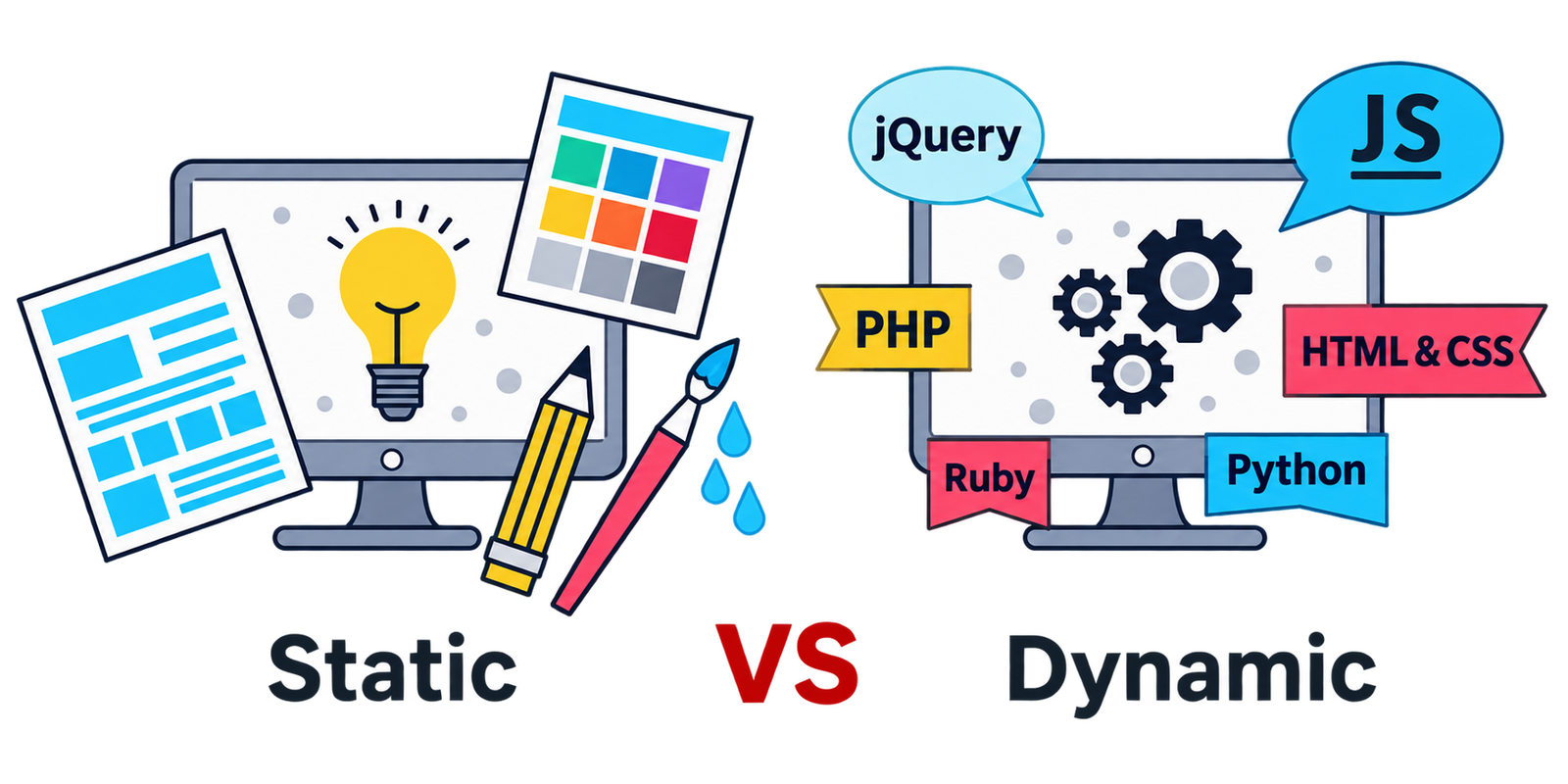
Static websites are made up of fixed, pre-built web pages that deliver content to its visitors. These websites do not need any complex programming or database and they are usually created using HTML (Hypertext Markup Language) and CSS (Cascading Style Sheets). These websites are typically budget friendly and have the ability to reach larger audience. They are best for smaller sites that require less frequent updates or interactivity.
Key features of static website:
- Simple DevelopmentCreating static websites involves basic web development skills, making them accessible as well as affordable for individuals or small businesses.
- Fast Loading SpeedThese websites don't require complicated codes or databases to be created. As a result their loading is quick and smooth providing their users a seamless experience.
- Content StabilityThe content on static websites remains unchanged unless manually updated by the website administrator. Each page is independent of one another and retains a consistent layout.
- Lower MaintenanceSince static websites don't rely on much updates or complex functionality, they generally require less maintenance and fewer security measures.
Examples of Static Websites:
Brochure websites, personal portfolios, and small business websites are commonly built as static websites. These platforms primarily aim to provide information and establish an online presence, without extensive user interactivity.
Dynamic website
Dynamic websites are the opposite of static websites. They focus on interacting with users and providing personalized experiences. They use programming languages and databases to create websites that can process real-time data, authenticate users, manage content, and offer customizable user interfaces. These websites are ideal for organizations that need to update their content frequently.
Key features of Dynamic Websites
- Database-Driven ContentDynamic websites can fetch data from databases and generate content based on user requests or interactions. This assists in user-specific experiences, and customized functionality.
- User InteractivityDynamic websites often incorporate features like user registration, login systems, comment sections, and interactive forms, enabling visitors to interact, contribute, and engage with the website's content.
- Real-time UpdatesDynamic websites can provide real-time updates or notifications to users. For example, social media platforms display new posts as they are posted, chat applications show instant messages, and news websites provide live updates.
- Integration of third party apps:Dynamic websites can integrate with various external services and APIs, enabling functionalities such as maps, social media sharing, analytics, email marketing, and more. This enhances the website's capabilities and extends its reach.
Examples of Dynamic Websites:
E-commerce platforms, social media networks, blogging websites, news portals, and large-scale corporate websites are typically developed as dynamic websites. These websites require frequent content updates, user-generated content, and advanced functionality to provide a rich and interactive user experience.
Conclusion
So, to wrap things up, both the websites have their own use cases but it's important for you to consider your own specific needs and goals. If you're looking for a simple, cost-effective way to build a website and establish yourself online , then a static website might be the right choice. Whereas, if you require frequent updates, interactive features, and a more engaging user experience then a dynamic website is the way to go.
By aligning your website's needs and goals with the appropriate type, you can create an engaging digital platform and boost your online presence.